Materials · Labour · The sea
Before
the voyage.
Hemp, rope and the age of sail.
Before a ship could sail, someone had to make its rope.
Follow the thread ↓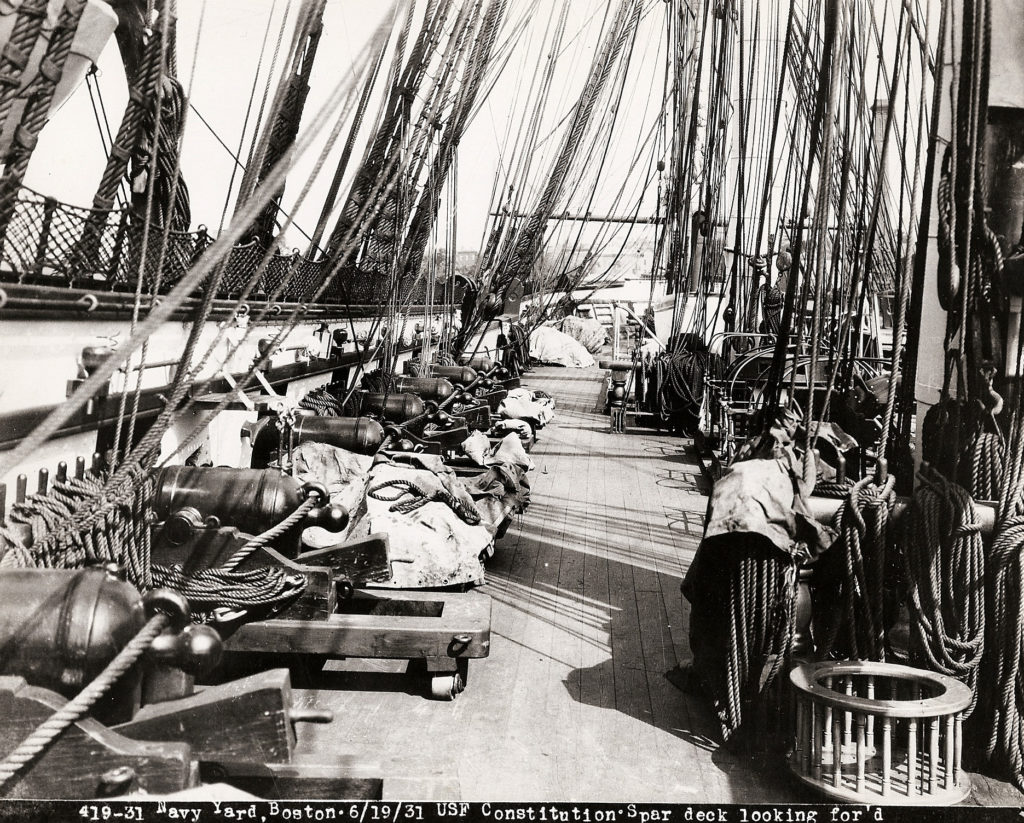
Look beyond the sails
A sailing ship draws the eye upwards. Masts. Canvas. A web of lines against the sky. Look more closely and another story appears: a material made on land, through skilled work, that helped a vessel operate at sea.
Hemp belongs in that story. But telling it well means looking at particular ships, places and records—not treating every rope, sail or voyage as evidence of the same plant.
A plant becomes
a working line.
The National Park Service describes hemp’s long, strong fibres as a favoured raw material for early ropewalks. Preparing those fibres was only the beginning: they had to be spun, combined and twisted into something a ship could use. [1]
The sequence below follows the mechanised process documented at Charlestown Navy Yard. It is a specific example, not a claim that every workshop used identical equipment. [2]
- 01
Fibre
Plant fibres prepared into ribbon-like slivers.
- 02
Yarn
Slivers spun into yarn and wound onto bobbins.
- 03
Strand
Several yarns twisted together along the ropewalk.
- 04
Rope
Strands laid together, with alternating twist directions.
Twist is part of the engineering: opposing directions help the components hold together rather than unravel. Simplified sequence based on NPS’s Charlestown account. [2]
Why a ropewalk
was so long.
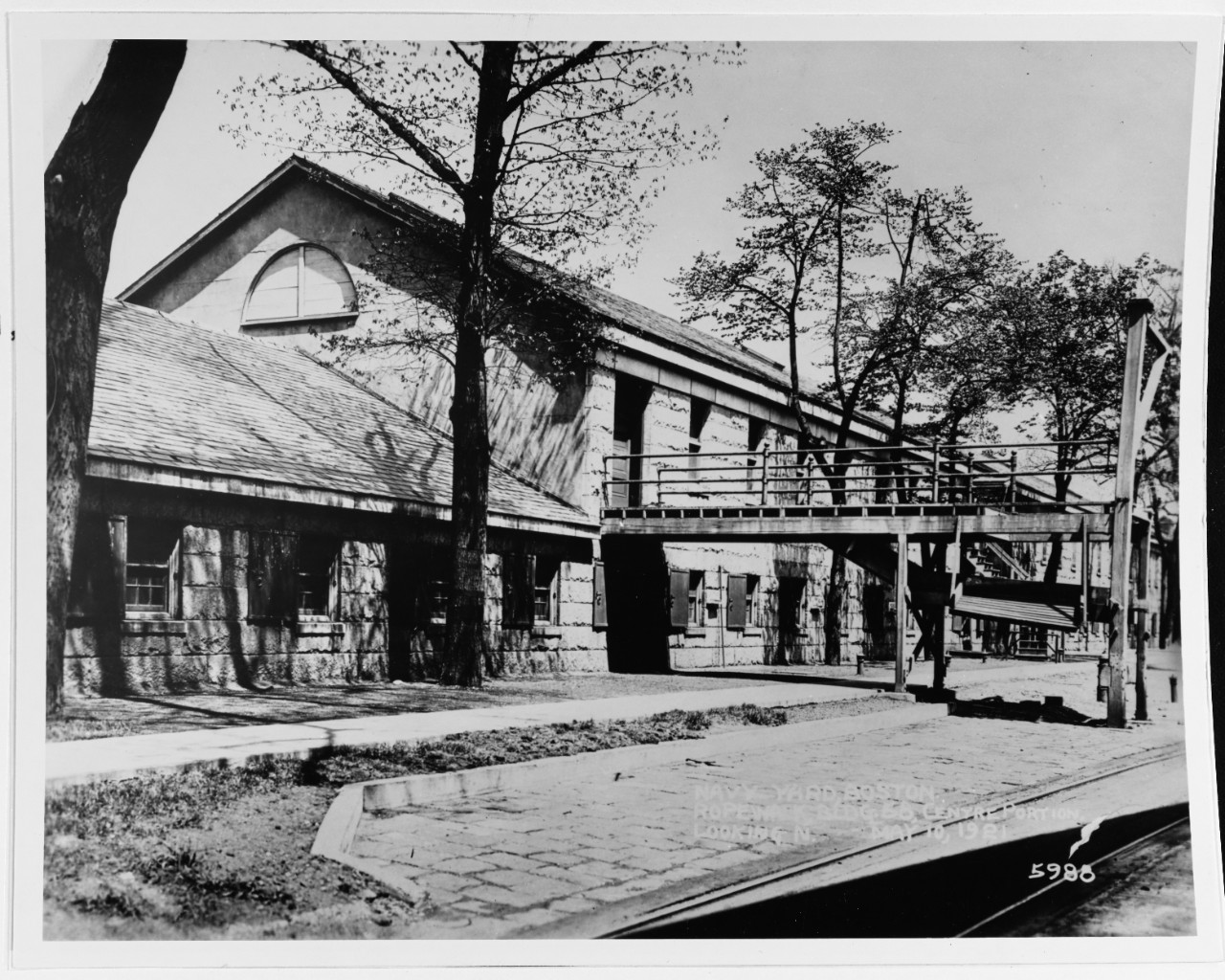
At Charlestown, the ropewalk opened in 1838. Its 1,325-foot length gave workers room to make long runs of cordage. The building’s shape was a consequence of what happened inside it. [1]
A different site makes the labour tangible. At Jones Point in Alexandria, Virginia, a ropewalk built in 1833 stretched 400 yards. The NPS account describes a spinner walking backwards while working hemp fibres, potentially covering as much as 20 miles in a ten-hour day. That figure belongs to this interpretation of the work—not to every ropemaker everywhere. [4]
Archaeologists later found foundations and a dark stain at Jones Point, interpreted as probably left by tar used to protect cordage against rot. A trace in the ground connects a finished rope to the practical business of keeping it serviceable. [4]
Not every “hemp”
is the same plant.
Material names can mislead. The USS Constitution Museum explains that nineteenth-century American ropemakers also used “Manila hemp”: abacá imported through the Philippines, not Cannabis sativa. [3]
The distinction continues today. Chatham’s Master Ropemakers states that its product called “Chatham Hemp” is now made from flax. A traditional name can survive a change in material. [5]
A strategic material.
Not a single-cause history.
The US Navy regarded rope as important enough to manufacture at Charlestown alongside private suppliers. In wartime, the government facility could increase production while commercial industry caught up. [1]
That gives us a grounded connection between plant fibre and maritime power. It does not establish that hemp caused a particular war, or that one material explains the rise of an empire. Those arguments need their own evidence.
Nor should the beauty of a ship turn its history into an uncomplicated celebration. Questions about where it sailed, what it carried, who worked aboard and who bore the consequences belong alongside the engineering. This feature establishes the material story; the histories of particular voyages require a further, equally careful investigation.
The most useful question is not “Was everything once hemp?” It is: what was this object made from, who made it, and how do we know?
Follow the evidence
Sources & image credits.
Research checked 22 October 2026. These examples focus on documented American ropewalks, with a modern British comparison. They are not a complete global history of cordage.
- National Park Service: Charlestown Navy Yard—Ropewalk. Building, materials and strategic role. Archival ropewalk image credited to Naval History and Heritage Command on the source page; US government photograph.
- National Park Service: Ropemaking at the Charlestown Navy Yard. Manufacturing sequence and alternating twists.
- Margherita Desy and Phaedra Scott: Ropemakers for the Navy, Part II. USS Constitution Museum, 2016. Abacá, restoration materials and plan 50670. Deck photograph: Naval History and Heritage Command Detachment Boston, 19 June 1931; US government photograph, reproduced via the museum.
- National Park Service: The Jones Point Ropewalk. Labour, building dimensions and archaeological interpretation.
- Chatham Historic Dockyard Trust: Chatham Hemp. Present-day product composition; not evidence that flax and cannabis are botanically identical.
Keep exploring
From the ship
to everyday life.
Construction, textiles, paper and food: follow more material connections through the records.
Explore Hemp: Then & Now ↗All stories →